Smartphone Velocity Based Training Revolution

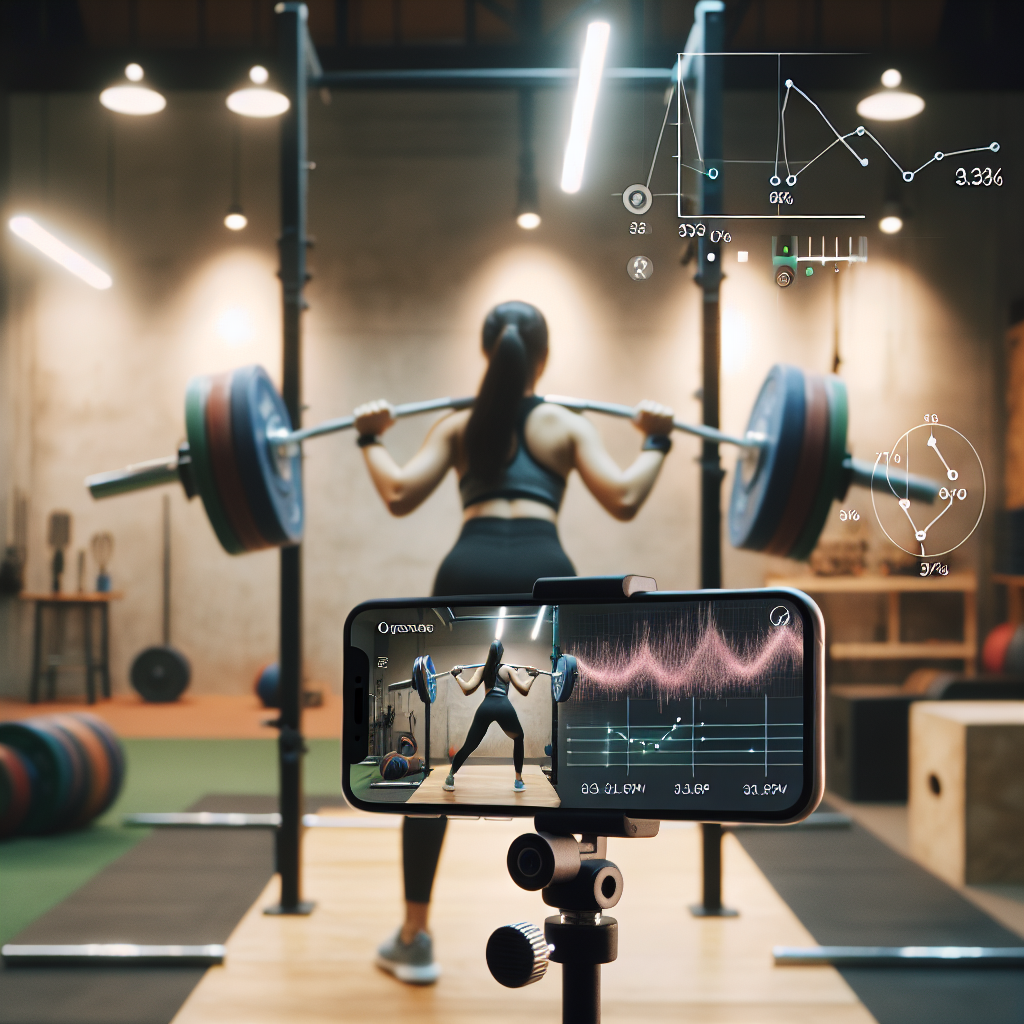
Introduction
In the fast-evolving world of fitness, the tools we use to measure progress are just as important as the workouts themselves. Velocity-based training (VBT) has long been the guarded secret of elite strength coaches, using expensive linear transducers and force plates to fine-tune training loads and avoid unnecessary fatigue. But for many athletes and fitness enthusiasts—often juggling limited budgets and busy schedules—a high-tech device costing as much as a college semester simply isn’t feasible.
Enter a game-changing solution: open-source, computer-vision tools that transform your smartphone camera into a potent, affordable VBT lab. Projects like OpenBar are harnessing the power of crowd-sourced data and machine learning, democratizing access to training insights once reserved for elite research laboratories [1][3]. Here, we dive into the research, outline the science behind this camera-first revolution, and offer practical, step-by-step advice for athletes striving for that next personal record—all while addressing the everyday challenges faced in the gym.
1. Can a Phone Really See What a Transducer Feels?
Recent studies have rigorously tested popular pose-estimation algorithms—such as YOLO Pose, OpenPose, and DeepLabCut—with real-world gym footage. The findings are promising:
- When conditions are optimal (i.e., good lighting and a side-on camera angle), key-point detection accuracy can reach around 83% [1].
- Tools like Pose2Sim and PosePipe now allow non-programmers to generate 3D bar paths in minutes rather than months [1][3].
- However, challenges remain: accuracy can falter if the bar is obscured by a spotter, if the camera is at an awkward angle, or if the gym environment is cluttered like a nightclub [1][4].
Action step: For best results, position your smartphone at waist-to-head height, roughly eight to ten feet from where the lift occurs. Ensure the bar is moving perpendicular to the lens. Good lighting and high-contrast clothing can also markedly reduce errors in key-point detection.
2. Establishing Benchmarks in a Sea of Variability
Unlike the well-established heart-rate zones used by runners, there isn’t yet a universal "bar-speed zone" for strength training. Most coaches currently develop individualized load-velocity profiles or apply broad velocity-loss cut-offs—typically set between 10% and 25%—to decide when to end a set [2]. This absence of standardized reference is exactly what crowd-sourced projects like OpenBar aim to address. Imagine a Strava-like leaderboard for bench press velocities, tailored to your unique performance metrics.
Action step: Begin tracking your own bar speeds at different loads (for example, 40%, 60%, and 80% of your one-repetition maximum). Over time, you’ll develop a personalized velocity profile—a “fingerprint” that can inform your auto-regulation strategy far more effectively than generic tables ever could.
3. Video Meets Hardware: Finding Common Ground
For most moderate loads (30–70% of 1RM), velocities captured on video align closely with those measured by linear transducers, often differing by only ±0.03 m/s [5][6]. However, at heavier loads or in less-than-ideal conditions (like dim lighting), discrepancies can increase. This means that while video analysis is excellent for day-to-day programming, world-class athletes attempting record-breaking lifts might still want periodic calibration against dedicated hardware.
Think of it as your smartphone’s GPS: reliable for daily navigation, yet professional pilots rely on multiple systems before takeoff.
Action step: If you’re coaching at a collegiate or pro level, try a side-by-side test where you film a set while also using a transducer. Use the resulting data to calibrate your video measurements—ensuring you keep the accuracy needed for high-stakes competition.
4. Pixels as an Indicator of Effort
Bar speed isn’t merely a number—it's a clear window into muscular fatigue. A rapid drop in velocity (say, more than 20% during a set) is strongly correlated with an increase in perceived exertion and the approach of muscular failure [2][5]. Thanks to modern smartphone apps, these velocity-loss percentages can now be monitored in real time. This immediate feedback allows athletes to terminate a set before additional repetitions become unproductive, ensuring quality over quantity.
Action step: Experiment with setting a velocity-loss threshold. On power development days, consider ending your set with a 10% drop in speed, whereas for hypertrophy training, a 20–25% drop might be acceptable. Notice how these adjustments affect your recovery and progression in subsequent sessions.
5. Democratizing Auto-Regulation
The expensive linear transducers offer around 98% accuracy but are out of reach for many due to their high costs—sometimes as much as a used car. Video analysis, while slightly less precise, is expanding access to VBT for schools, community gyms, and even garage lifters. This shift is transforming VBT from a niche luxury into a standard practice that could benefit athletes worldwide [6].
Action step: Begin with free or low-cost apps that leverage open-source code. As platforms like OpenBar continue to develop and incorporate larger datasets, you can expect regular software updates that improve accuracy without the need for additional hardware expenses.
6. Overcoming Practical Pitfalls
Even the most promising technologies have their challenges, especially in a dynamic environment like the gym. Here are some common issues—and how to tackle them:
- Occlusion: Ensure that spotters are positioned off to the side rather than directly in line with the camera.
- Camera Shake: Utilize a stable tripod; shaky footage translates to unreliable data.
- Lighting: Choose well-lit environments. If you wouldn’t record quality content for social media, avoid filming your lifts there.
- Background Clutter: Reduce distractions from mirrors, other gym-goers, or moving equipment that might confuse the vision algorithms [1][4].
Treat your smartphone like a mini sports-science laboratory: stable, well-lit, and strategically positioned for the best measurement accuracy.
Conclusion
With smartphones entering the realm of scientific measurement through open-source computer-vision tools, the future of velocity-based training looks more accessible than ever. While high-end transducers remain the gold standard for elite-level competition, video-based systems provide a practical and affordable solution for everyday training. Their ability to deliver near-instant feedback on fatigue and effort bridges the gap between expensive lab equipment and the realities of daily workouts.
For many athletes and coaches, the biggest opportunity lies in harnessing crowd-sourced data to create global benchmarks for lifting performance—differentiated by age, gender, and sport. Until that vision is fully realized, the action is clear: set up your phone, record your lifts with intentional precision, and let the pixels guide you toward your next personal best.
References
[1] Porta, E., Calatayud, A., et al. (2021). Pose2Sim: An End-to-End Workflow for 3D Markerless Sports Kinematics—Part 1: Robustness. Sensors, 21(19), 6530. Retrieved from https://www.mdpi.com/1424-8220/21/19/6530
[2] Faulks, T., Sansone, P., & Walter, S. (2024). A Systematic Review of Lower Limb Strength Tests Used in Elite Basketball. Sports (Basel). Retrieved from https://www.mdpi.com/2075-4663/12/10/262
[3] Andriluka, M., et al. (2018). PoseTrack: A Benchmark for Human Pose Estimation and Tracking. arXiv preprint arXiv:1710.10000. Retrieved from https://arxiv.org/abs/1710.10000
[4] OpenCapBench: A Benchmark to Bridge Pose Estimation and Biomechanics. arXiv preprint arXiv:2406.09788. Retrieved from https://arxiv.org/abs/2406.09788
[5] Forelli, F., et al. (2025). Velocity-Based Training in Mid- and Late-Stage Rehabilitation After Anterior Cruciate Ligament Reconstruction: A Narrative Review and Practical Guidelines. BMJ Open Sport & Exercise Medicine.
[6] Weakley, J. J. S., et al. (2021). The Validity and Reliability of Commercially Available Resistance Training Monitoring Devices: A Systematic Review. Sports Medicine Open, 7, 45. Retrieved from https://www.ncbi.nlm.nih.gov/pmc/articles/PMC7900050/
[7] Zoffoli, L., Zanuso, S., & Biscarini, A. (2025). Effects on Force, Velocity, Power, and Muscle Activation of Resistances with Variable Inertia Generated by Programmable Electromechanical Motors During Explosive Chest Press Exercises. Bioengineering (Basel), 12(3), 154. Retrieved from https://www.mdpi.com/2306-5354/12/3/154