
2 posts tagged with "strength training"

View All Tags

Smartphone Velocity Based Training Revolution

· 7 min read
wodsai
Writer @ wodsai

Smartphone Velocity Based Training Revolution

Introduction

In the fast-evolving world of fitness, the tools we use to measure progress are just as important as the workouts themselves. Velocity-based training (VBT) has long been the guarded secret of elite strength coaches, using expensive linear transducers and force plates to fine-tune training loads and avoid unnecessary fatigue. But for many athletes and fitness enthusiasts—often juggling limited budgets and busy schedules—a high-tech device costing as much as a college semester simply isn’t feasible.

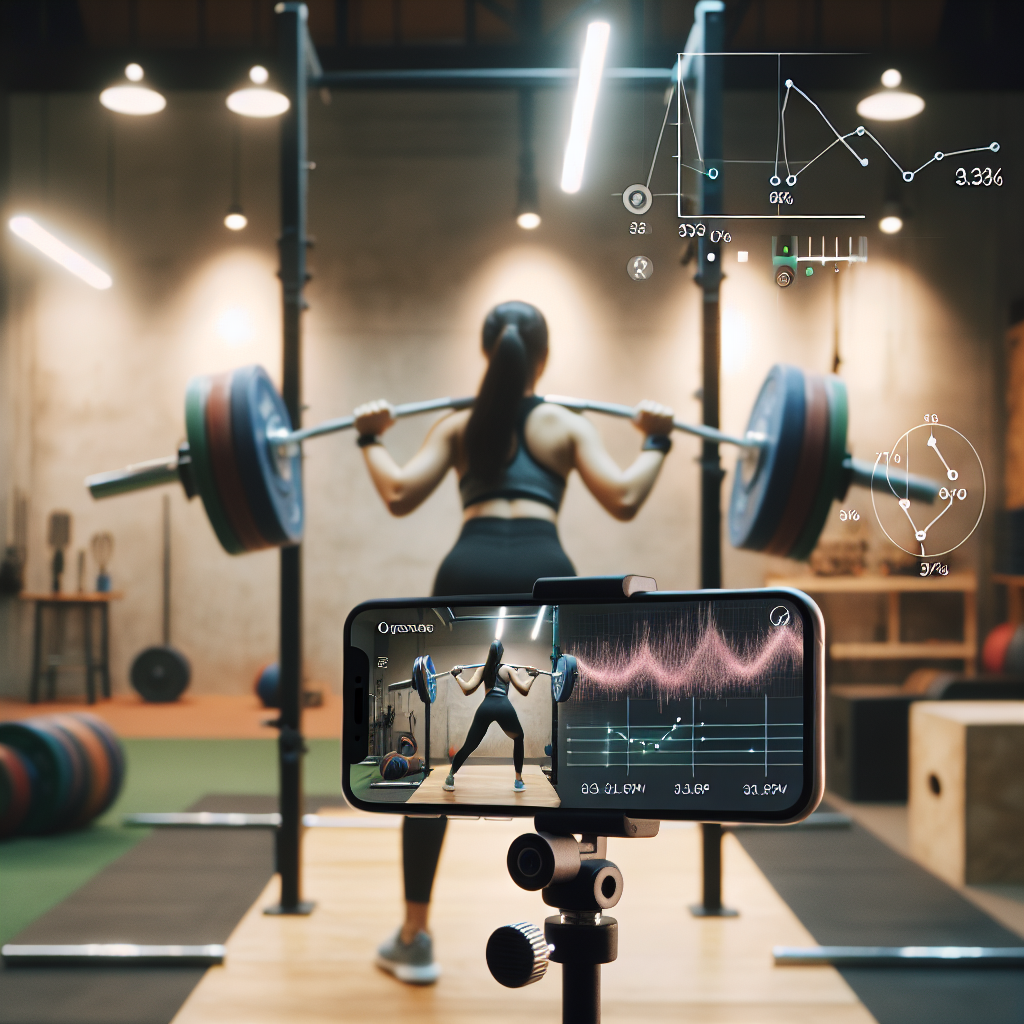
Enter a game-changing solution: open-source, computer-vision tools that transform your smartphone camera into a potent, affordable VBT lab. Projects like OpenBar are harnessing the power of crowd-sourced data and machine learning, democratizing access to training insights once reserved for elite research laboratories [1][3]. Here, we dive into the research, outline the science behind this camera-first revolution, and offer practical, step-by-step advice for athletes striving for that next personal record—all while addressing the everyday challenges faced in the gym.

1. Can a Phone Really See What a Transducer Feels?

Recent studies have rigorously tested popular pose-estimation algorithms—such as YOLO Pose, OpenPose, and DeepLabCut—with real-world gym footage. The findings are promising:

  • When conditions are optimal (i.e., good lighting and a side-on camera angle), key-point detection accuracy can reach around 83% [1].
  • Tools like Pose2Sim and PosePipe now allow non-programmers to generate 3D bar paths in minutes rather than months [1][3].
  • However, challenges remain: accuracy can falter if the bar is obscured by a spotter, if the camera is at an awkward angle, or if the gym environment is cluttered like a nightclub [1][4].

Action step: For best results, position your smartphone at waist-to-head height, roughly eight to ten feet from where the lift occurs. Ensure the bar is moving perpendicular to the lens. Good lighting and high-contrast clothing can also markedly reduce errors in key-point detection.

2. Establishing Benchmarks in a Sea of Variability

Unlike the well-established heart-rate zones used by runners, there isn’t yet a universal "bar-speed zone" for strength training. Most coaches currently develop individualized load-velocity profiles or apply broad velocity-loss cut-offs—typically set between 10% and 25%—to decide when to end a set [2]. This absence of standardized reference is exactly what crowd-sourced projects like OpenBar aim to address. Imagine a Strava-like leaderboard for bench press velocities, tailored to your unique performance metrics.

Action step: Begin tracking your own bar speeds at different loads (for example, 40%, 60%, and 80% of your one-repetition maximum). Over time, you’ll develop a personalized velocity profile—a “fingerprint” that can inform your auto-regulation strategy far more effectively than generic tables ever could.

3. Video Meets Hardware: Finding Common Ground

For most moderate loads (30–70% of 1RM), velocities captured on video align closely with those measured by linear transducers, often differing by only ±0.03 m/s [5][6]. However, at heavier loads or in less-than-ideal conditions (like dim lighting), discrepancies can increase. This means that while video analysis is excellent for day-to-day programming, world-class athletes attempting record-breaking lifts might still want periodic calibration against dedicated hardware.

Think of it as your smartphone’s GPS: reliable for daily navigation, yet professional pilots rely on multiple systems before takeoff.

Action step: If you’re coaching at a collegiate or pro level, try a side-by-side test where you film a set while also using a transducer. Use the resulting data to calibrate your video measurements—ensuring you keep the accuracy needed for high-stakes competition.

4. Pixels as an Indicator of Effort

Bar speed isn’t merely a number—it's a clear window into muscular fatigue. A rapid drop in velocity (say, more than 20% during a set) is strongly correlated with an increase in perceived exertion and the approach of muscular failure [2][5]. Thanks to modern smartphone apps, these velocity-loss percentages can now be monitored in real time. This immediate feedback allows athletes to terminate a set before additional repetitions become unproductive, ensuring quality over quantity.

Action step: Experiment with setting a velocity-loss threshold. On power development days, consider ending your set with a 10% drop in speed, whereas for hypertrophy training, a 20–25% drop might be acceptable. Notice how these adjustments affect your recovery and progression in subsequent sessions.

5. Democratizing Auto-Regulation

The expensive linear transducers offer around 98% accuracy but are out of reach for many due to their high costs—sometimes as much as a used car. Video analysis, while slightly less precise, is expanding access to VBT for schools, community gyms, and even garage lifters. This shift is transforming VBT from a niche luxury into a standard practice that could benefit athletes worldwide [6].

Action step: Begin with free or low-cost apps that leverage open-source code. As platforms like OpenBar continue to develop and incorporate larger datasets, you can expect regular software updates that improve accuracy without the need for additional hardware expenses.

6. Overcoming Practical Pitfalls

Even the most promising technologies have their challenges, especially in a dynamic environment like the gym. Here are some common issues—and how to tackle them:

  1. Occlusion: Ensure that spotters are positioned off to the side rather than directly in line with the camera.
  2. Camera Shake: Utilize a stable tripod; shaky footage translates to unreliable data.
  3. Lighting: Choose well-lit environments. If you wouldn’t record quality content for social media, avoid filming your lifts there.
  4. Background Clutter: Reduce distractions from mirrors, other gym-goers, or moving equipment that might confuse the vision algorithms [1][4].

Treat your smartphone like a mini sports-science laboratory: stable, well-lit, and strategically positioned for the best measurement accuracy.

Conclusion

With smartphones entering the realm of scientific measurement through open-source computer-vision tools, the future of velocity-based training looks more accessible than ever. While high-end transducers remain the gold standard for elite-level competition, video-based systems provide a practical and affordable solution for everyday training. Their ability to deliver near-instant feedback on fatigue and effort bridges the gap between expensive lab equipment and the realities of daily workouts.

For many athletes and coaches, the biggest opportunity lies in harnessing crowd-sourced data to create global benchmarks for lifting performance—differentiated by age, gender, and sport. Until that vision is fully realized, the action is clear: set up your phone, record your lifts with intentional precision, and let the pixels guide you toward your next personal best.

References

[1] Porta, E., Calatayud, A., et al. (2021). Pose2Sim: An End-to-End Workflow for 3D Markerless Sports Kinematics—Part 1: Robustness. Sensors, 21(19), 6530. Retrieved from https://www.mdpi.com/1424-8220/21/19/6530

[2] Faulks, T., Sansone, P., & Walter, S. (2024). A Systematic Review of Lower Limb Strength Tests Used in Elite Basketball. Sports (Basel). Retrieved from https://www.mdpi.com/2075-4663/12/10/262

[3] Andriluka, M., et al. (2018). PoseTrack: A Benchmark for Human Pose Estimation and Tracking. arXiv preprint arXiv:1710.10000. Retrieved from https://arxiv.org/abs/1710.10000

[4] OpenCapBench: A Benchmark to Bridge Pose Estimation and Biomechanics. arXiv preprint arXiv:2406.09788. Retrieved from https://arxiv.org/abs/2406.09788

[5] Forelli, F., et al. (2025). Velocity-Based Training in Mid- and Late-Stage Rehabilitation After Anterior Cruciate Ligament Reconstruction: A Narrative Review and Practical Guidelines. BMJ Open Sport & Exercise Medicine.

[6] Weakley, J. J. S., et al. (2021). The Validity and Reliability of Commercially Available Resistance Training Monitoring Devices: A Systematic Review. Sports Medicine Open, 7, 45. Retrieved from https://www.ncbi.nlm.nih.gov/pmc/articles/PMC7900050/

[7] Zoffoli, L., Zanuso, S., & Biscarini, A. (2025). Effects on Force, Velocity, Power, and Muscle Activation of Resistances with Variable Inertia Generated by Programmable Electromechanical Motors During Explosive Chest Press Exercises. Bioengineering (Basel), 12(3), 154. Retrieved from https://www.mdpi.com/2306-5354/12/3/154

Heat Priming Before Squats Fact or Fiction

· 7 min read
wodsai
Writer @ wodsai

Heat Priming Before Squats Fact or Fiction

Can a quick session in a 90 °C sauna before your heavy squat set really boost your performance? For athletes and coaches, every edge counts, and the idea that “heat priming” your muscles might enhance strength and hypertrophy is intriguing. In this article, we sift through the evidence, consider the practical challenges athletes face, and offer actionable tips for safely integrating heat into your training routine.


Introduction

Imagine you're at the gym, about to start your first set of heavy squats. Instead of jumping straight into dynamic warm-ups, you spend 15 minutes in a cedar-scented sauna, your heart rate rising as you relax into the warmth. The theory behind this approach is simple: that passive heat exposure can prime your muscles for improved performance during your lifts. But can a sauna really do more than provide a comforting ritual? Recent systematic reviews and meta-analyses—examining everything from infrared saunas to hot-water immersions—suggest that while heat may boost your perception of readiness, it might not translate into measurable gains in strength or power [1][2].


The Promise vs. The Data

What Athletes Hope For

  • Faster muscle activation
  • Immediate improvements in strength numbers
  • Enhanced muscle growth over time

What the Research Shows

Seventeen controlled studies suggest that while passive heat exposure makes athletes feel less stiff and often reduces perceived exertion (similar to the boost you might feel from your favorite hype track), it does not consistently result in greater force production or improved neuromuscular activation [1][2]. Think of it as a psychological caffeine boost rather than a miracle pre-workout formula.


Short-Term Effects: Warm Muscles, Unchanged Bar Speed

Muscle Temperature and Comfort

Saunas (around 90–100 °C for 15–20 minutes) and hot baths (40–41 °C for 20–30 minutes) reliably raise deep muscle temperature above the 39 °C threshold. This increase can ease joint stiffness and enhance range of motion, making your body feel more prepared for exercise [1].

Strength & Power

However, measurements like bench press one-repetition maximum (1RM), squat jump height, and isokinetic torque do not show consistent improvements with passive heat priming when compared to an active dynamic warm-up. The take-home message? While heat can make you feel more relaxed and less fatigued, it doesn’t necessarily translate into immediate strength gains [2].

Perceived Exertion

A notable benefit is that athletes often report lower ratings of perceived exertion (RPE)—by about 6–10%—after heat priming. This psychological benefit is real and can be valuable during training, especially on days when the body feels stiff or sluggish [2][3].


Long-Term Adaptations: Heat, Training, and Muscle Growth

Over a period of six to twelve weeks, studies have explored whether regular heat exposure can compound with resistance training to elicit additional gains:

PopulationHeat ProtocolOutcome vs. Training Alone
Trained liftersInfrared sauna 3×/week, 15 minutes post-liftNo extra 1RM gain or hypertrophy [2]
Recreational gym-goersHot-water immersion 4×/week, 25 minutes pre-liftSmall increase in explosive power, but no extra muscle size [3]
Clinical/Older adultsLocal heat wraps daily, 40 minutesSlight strength improvements, likely from better session compliance [4]

Even if the long-term use of heat shows some promise, the protocols that would potentially drive meaningful muscle growth—such as longer or more frequent heat sessions—are often impractical for competitive athletes looking for immediate returns.


Dose–Response: How Much Heat Is Enough?

Research suggests there is a Goldilocks zone when it comes to heat exposure:

  • Temperature: The goal is to raise muscle temperature rather than simply heating the skin. Achieving a muscle temperature above 39 °C is key.
  • Duration: Systemic methods (like whole-body saunas) generally require 20–30 minutes, while localized heat treatments may need to be doubled.
  • Frequency: For chronic adaptations, sessions should be performed at least three times a week for a minimum of four weeks.
  • Safety Limits: Pushing beyond—core temperatures above 39.5 °C or sessions lasting over 60 minutes—can increase the risk of dehydration and place extra strain on the cardiovascular system [5].

Think of whole-body heat as a broad brushstroke that benefits your overall sensation of readiness, while localized heat applications are more like a fine-tip pen—useful but slower to produce tangible performance improvements.


Who Can Benefit?

Different athletes might see varied benefits from integrating heat priming:

GroupLikely BenefitRationale
Untrained / Rehab ClientsModerateEases stiffness and improves session adherence, which is crucial in rehabilitation [3]
Older AdultsModerateProvides joint relief and might stimulate anabolic signaling, encouraging consistency [4]
Elite LiftersMinimalThese athletes operate near their performance ceiling and require impractical doses for gains [2][5]
Hypertrophy-Focused BodybuildersUnclearWhile lab models suggest a potential benefit, real-world data are less convincing [3]

For athletes facing the intense pressures of competition, even small benefits can be attractive—but it’s vital to recognize the limitations and risks involved.


Safety First: Using Heat Responsibly

Before experimenting with heat priming, it’s essential to screen for contraindications such as cardiovascular issues, hypertension, or any conditions that impair thermoregulation. The American College of Sports Medicine (ACSM) recommends gradual acclimation—start with shorter sessions (10–15 minutes at 40–60 °C), stay well-hydrated, and always monitor for signs of dizziness or nausea [5][6].


Practical Playbook for the Weight Room

  1. Maintain an Active Warm-Up:
    Dynamic mobility exercises remain the most reliable method for neuromuscular activation. Use heat primarily as a supplementary ritual rather than a substitute.

  2. Leverage Heat for Comfort, Not Performance:
    If an athlete enjoys a brief sauna session and experiences reduced stiffness, a 10–15 minute exposure can complement a dynamic warm-up—but avoid promising immediate personal records or explosive gains.

  3. Reserve Longer Heat Sessions for Recovery:
    Consider using 30–40 minute heat treatments post-training. This can be particularly beneficial on recovery days, where the focus is on muscle relaxation and reducing discomfort, especially for beginners.

  4. Customize According to Individual Needs:
    Remember that leaner athletes may heat up faster compared to those with higher body-fat percentages. Adjust the duration and intensity of heat exposure accordingly.

  5. Monitor Hydration and Core Temperature:
    Simple measures such as tracking body weight before and after a session, ensuring urine remains clear, and doing a self-assessment can help mitigate risks.


Conclusion

The allure of the "sauna-then-squat" routine is undeniable, offering a soothing prelude to the rigors of heavy lifting. However, current evidence indicates that while passive heat exposure can enhance your psychological readiness and comfort, it does not directly amplify strength or muscle power. For most healthy, trained athletes, heat priming should be viewed as an optional tool—ideal for recovery and improving session adherence—rather than a substitute for tried-and-true warm-up practices, progressive overload, quality sleep, and balanced nutrition.

Keep your sauna sessions enjoyable, brief, and safely integrated around an active warm-up, and you might just find that extra edge in your training routine.


References

[1] Vrindten, K. L., Lonati, D. P., Mazzocca, J. L., & Matzkin, E. G. (2025). Thermal modalities including hot baths and cold plunges play a unique role in injury prevention and recovery. Arthroscopy, Sports Medicine, and Rehabilitation. Retrieved from https://pubmed.ncbi.nlm.nih.gov/38871373/

[2] Ahokas, E. K., Hanstock, H. G., Kyröläinen, H., & Ihalainen, J. K. (2025). Effects of repeated use of post-exercise infrared sauna on neuromuscular performance and muscle hypertrophy. Frontiers in Sports and Active Living. Retrieved from https://www.frontiersin.org/articles/10.3389/fspor.2025.1382240/full

[3] Normand-Gravier, T., Solsona, R., Dablainville, V., Racinais, S., Borrani, F., Bernardi, H., & Sanchez, A. M. J. (2024). Effects of thermal interventions on skeletal muscle adaptations and regeneration: perspectives on epigenetics. European Journal of Applied Physiology. Retrieved from https://europepmc.org/article/MED/38769714

[4] Kim, J.-S., Cross, J. M., & Bamman, M. M. (2020). Impact of heat application on muscle hypertrophy following resistance training. Journal of Applied Physiology, 129(4), 857-869. Retrieved from https://journals.physiology.org/doi/full/10.1152/japplphysiol.00322.2020

[5] American College of Sports Medicine. (2021). ACSM’s Guidelines for Exercise Testing and Prescription (11th ed.). Wolters Kluwer.

[6] Credeur, D. P., Hollis, B. C., & Black, C. D. (2024). Resistance training in the heat: mechanisms of muscle hypertrophy and practical recommendations. Journal of Strength and Conditioning Research, 38(7), 1416-1424. Retrieved from https://journals.lww.com/nsca-jscr/fulltext/2024/07000/resistance_training_in_the_heat__mechanisms_of.22.aspx